
Criminal Cases in the Yancey County Courts
North Carolina uses two trial levels for Yancey County criminal court cases. Yancey District Court tries misdemeanors and infractions. It also handles the first stages of a Yancey felony matter, including early hearings before indictment or transfer. Yancey Superior Court tries felonies. A qualifying appeal from a Yancey District Court criminal judgment can go to Superior Court for a new trial, called a trial de novo. Both Yancey courts are part of the General Court of Justice, and both are served by the Yancey County Clerk of Superior Court.
The Yancey clerk is the custodian of the court case file. That role differs from the Yancey prosecutor, arresting officer, jail, and state repository. The District Attorney for Prosecutorial District 35 prosecutes Yancey state charges but does not maintain the official docket. The Sheriff may hold a Yancey arrest report or booking record, yet those files do not replace the clerk's pleading, hearing entries, judgment, or disposition. Burnsville has no separate municipal court. State-law and town-ordinance cases move through the Yancey County District Court system.
The official Yancey County Courthouse page shows the building used for current court business.
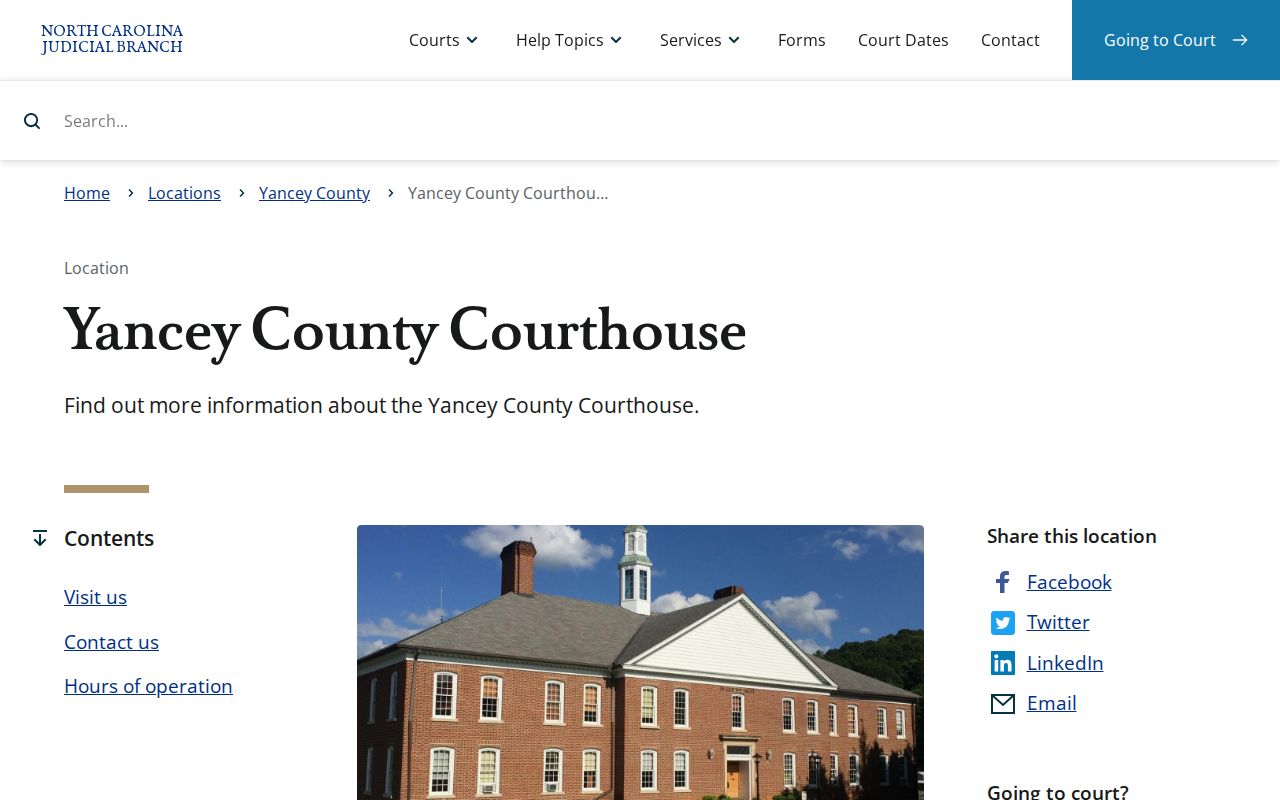
The current Yancey clerk counter is at 110 Towne Square, Room 5, Burnsville, not in the historic 1908 Yancey courthouse now used as Town Hall.
Yancey Criminal Case Portal
The North Carolina eCourts Portal offers anonymous public access to near-real-time Yancey docket information. Registration is optional and mainly adds saved-case tools. Select Yancey County as the location and Criminal Actions as the category. A party name or Yancey case number can start the search, while date, status, and case-type filters can cut down a broad result set. Portal is useful for the Yancey Register of Actions, which is the event list for a case. It is not the official Yancey record or an official criminal-history check.
The portal became available for Yancey County with the July 2025 eCourts conversion. Statewide implementation finished in October 2025. That change made more current Yancey docket facts available from a distance, which matters in a mountain county where a trip to Burnsville may take time. Pre-conversion or unscanned Yancey material can still require the clerk's file. Sealed, expunged, juvenile, confidential, and unreturned-warrant data remains outside anonymous public access.
The Judicial Branch provides official Portal training and Smart Search tips for the search controls.
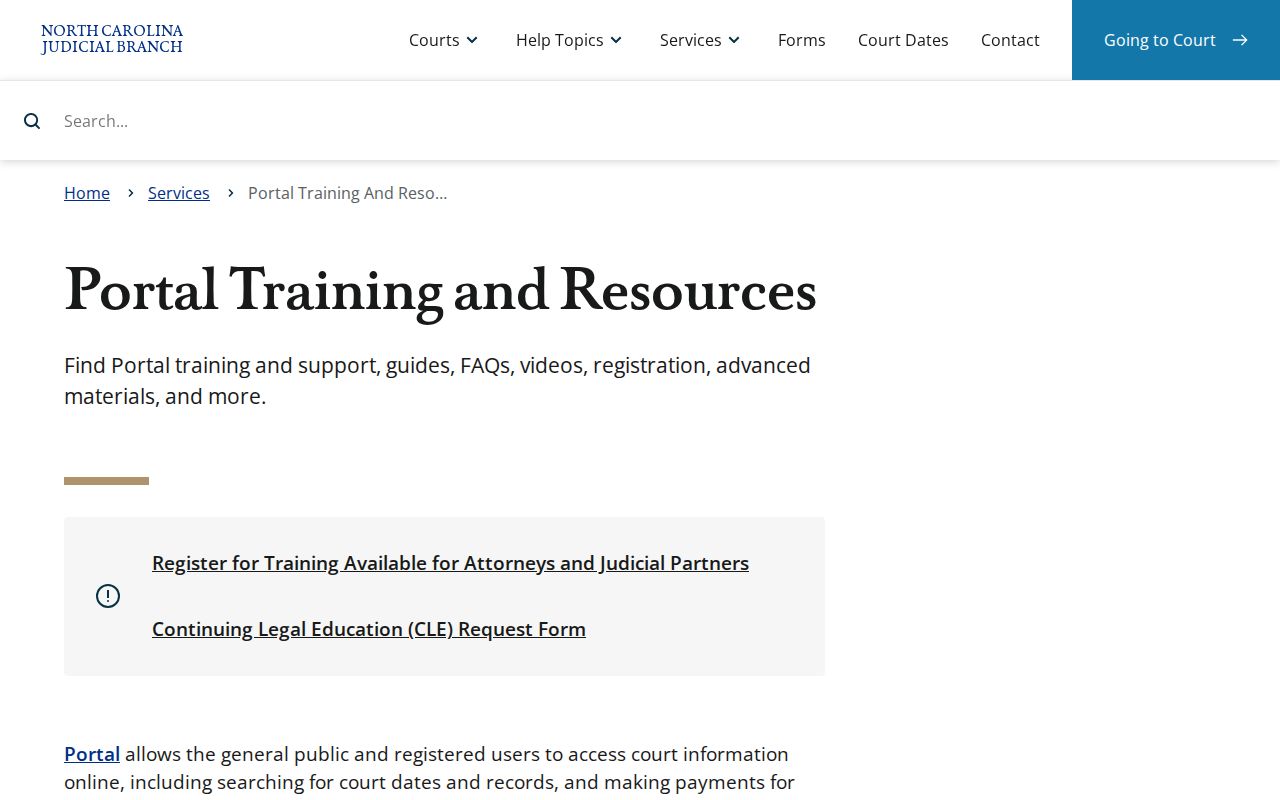
Those controls help separate a Yancey criminal action from Yancey civil, estate, and special-proceeding results that may share a party name.
How to Search Case Records
Begin with the least costly Yancey channel that can answer the question. Use Portal for a public Yancey summary, the courthouse terminal for a broader free court search, and the Yancey clerk's file when the actual document or a certified result is needed. A phone call to 828-678-5700 can confirm the right Yancey court division and copy method. The county Judicial Branch page also links Yancey criminal calendars and court dates.
- Open eCourts Portal and choose Yancey County under Location. Set the Yancey category to Criminal Actions.
- Search by the complete party name or Yancey Enterprise Justice case number. Use supported wildcards when the spelling is uncertain.
- Narrow results with filing dates, case type, case status, and other public party filters. Compare available birth data with care.
- Open the case summary and read the charge-level disposition, hearings, and Register of Actions. Do not treat a filed charge as a conviction.
- Ask the Yancey clerk for the paper or electronic official Yancey file, copies, or certification when the summary is not enough.
| Field Label | Type | Required | Use |
|---|---|---|---|
| Search bar | Text | Yes | Party name or case number; wildcard supported |
| Location | Filter | No | Select Yancey County |
| Party criteria | Filters | No | Name and documented birth-date fields |
| Case category | Filter | No | Select Criminal Actions |
| Status and type | Filters | No | Narrow the public result set |
| Filing date range | Dates | No | Limit results by start and end dates |
Yancey Court Terminal or Portal
The Judicial Branch court-record instructions describe several routes that remain available when a Yancey County criminal case does not yield the needed document online.
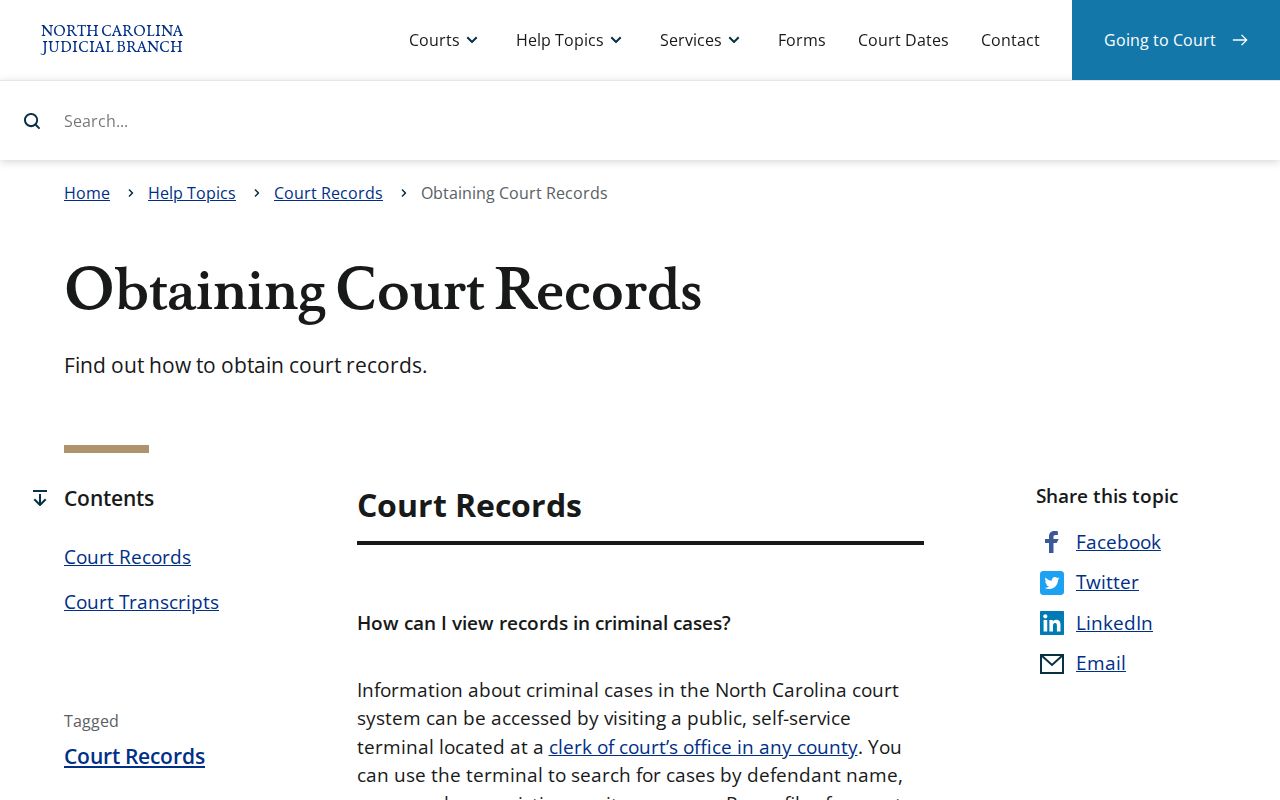
The Yancey courthouse terminal can search by defendant, case number, or victim and witness name. A noncertified Yancey terminal search is free, may cover one county or statewide court data, and can send results by email. Printing may cost. By contrast, Portal is convenient from home but does not promise every Yancey document or the authority of the Yancey clerk's file.
For a certified Yancey-only index search, submit form AOC-CR-314 with the $25 fee. The form records the county, requester, name or aliases to search, date of birth, identifying fields, requested date range, and whether infractions should be included. Juvenile records are excluded. Certification makes the result a clerk product, but the scope remains Yancey County court indices, not the fingerprint-supported statewide record held by the North Carolina State Bureau of Investigation.
The North Carolina Administrative Office of the Courts also licenses remote criminal data extracts. That specialized bulk channel has its own limits and does not replace the current official Yancey file.
Note: If Portal shows error 141011, ask the clerk to divide the oversized document rather than assuming no court record exists.
What the Case File Shows
A Yancey County court case file records the Yancey prosecution as it moves. Its parts may include a complaint or citation, charging document, probable-cause events, indictment, hearing settings, continuances, pleas, orders, judgment, sentence, and financial entries. Portal may expose a Yancey event without providing the filed document. Read the Yancey case and charge disposition fields together, then obtain the judgment if the precise outcome matters.
| Case Number and Court | Identifies the filing year, case type, sequence, county code, and District or Superior Court setting. |
|---|---|
| Charging Document | States the accusation filed in court; it does not by itself prove guilt. |
| Docket Entries | Lists public case events in the Register of Actions, including settings and filed actions. |
| Hearing Dates | May show date, time, courtroom, hearing type, and judicial officer. |
| Disposition and Judgment | Shows how each charge and the case ended, subject to the official file. |
| Sentence and Conditions | Records the punishment and public financial or probation terms when applicable. |
Yancey financial information can include costs, fines, restitution, or other public entries. A Yancey payment entry does not establish the disposition. Likewise, an attorney listing shows counsel of record, not the content of a private attorney-client file. Protected identifiers are omitted from the public Yancey view.
Read Yancey Criminal Dispositions
A common Yancey search mistake is to stop at the charge description. A Yancey charge tells what was alleged. The disposition tells how that allegation ended. Look for the result and date at the charge level, then compare the Yancey case status and judgment. Dismissal, acquittal, and conviction are distinct outcomes. A continuance or Yancey hearing event is only a step. It does not decide guilt.
Case numbers can also mark movement between court levels. A CR matter may reflect District Court activity, while a CRS file can follow a felony into Superior Court. The exact sequence should be traced instead of inferred from one code. For a plain-language answer, compare the Portal timeline with the official judgment in the clerk file. If the public summary seems incomplete, the clerk can identify whether another related case number or paper record exists.
- Arraignment
- The stage when the charge is formally presented and a plea may be entered.
- Disposition
- The recorded outcome of a charge, such as conviction, dismissal, or acquittal.
- Register of Actions
- The chronological public list of events entered in the court case.
- Trial de novo
- A new Superior Court trial available for qualifying appeals from District Court criminal judgments.
Stages of a Criminal Case
Yancey criminal cases do not all follow one identical path. A Yancey misdemeanor can remain in District Court. A Yancey felony begins with early District Court proceedings and may move to Superior Court after indictment or transfer. Plea negotiations, motions, and continuances can alter the order or length of Yancey events. The docket is therefore a record of what actually occurred, not a promise that each listed stage happened.
Case flow: Charges Filed › Arraignment › Pretrial › Plea or Trial › Disposition › Sentencing
The arrest may explain how a person entered the system, but the court file begins with filed process and records adjudication. Readers focused on the custody event can compare the separate Yancey County arrest history channels. The court docket remains the source for the prosecution's outcome.
Yancey Criminal Court Contacts
Call the Yancey office that owns the needed part of the record. The Yancey clerk answers questions about case numbers, files, copies, calendars, and certification. Magistrates handle initial judicial functions, while the District Attorney prosecutes Yancey cases. Neither office substitutes for the Yancey clerk as records custodian. The Yancey court contact directory identifies the local lines.
Have the case number ready when possible. The clerk is at 110 Towne Square, Room 5, Burnsville, NC 28714, and can be reached at 828-678-5700. The District Attorney's Yancey line is 828-678-5720, and the magistrates' line is 828-678-5730.
Yancey Clerk of Superior Court
110 Towne Square, Room 5
Burnsville, NC 28714
828-678-5700
Yancey eCourts Case Conversion
Yancey joined eCourts Track 9 on July 21, 2025. The Yancey milestone expanded online docket access and electronic filing, but it did not turn Portal into the official Yancey record. A scanned Yancey file can be absent, too large to download, sealed, or tied to older material that still needs clerk review. Searchers should use the digital Yancey event list as a map to the case and the clerk's record as the final source.
Calendar disruptions can matter when reading dates. After Hurricane Helene, a statewide emergency order treated certain acts due from September 26 through October 28, 2024, as timely through October 28. A date that looks late in isolation may have been governed by that relief. The docket and any related order should be read together before drawing a conclusion about a missed deadline.
Access & Restrictions
North Carolina law supports access to public Yancey court records through G.S. 7A-109, subject to statutes and court rules. That access does not include every Yancey record. Juvenile, sealed, expunged, victim-protected, and other confidential information may be withheld. Unreturned criminal warrants are restricted from anonymous Portal access. A missing Yancey online entry can therefore reflect law or system scope rather than the absence of a case.
Ask the Yancey clerk about an identified case when the public view is incomplete. Returned warrants and related Yancey process may become public unless sealed, but a Chapter 132 request cannot override a specific restriction. Yancey court records also differ from police investigative files, which are generally nonpublic under G.S. 132-1.4 even though certain incident and arrest facts must be released. Narrow Yancey requests to the right custodian and the right record.
Note: A charge on a public docket is an accusation; only the recorded disposition and judgment show how that charge ended.